


What is a Sinus?
The maxillary sinuses are behind your cheeks and on top of the upper teeth. These sinuses are empty, air-filled spaces. Some of the roots of the natural upper teeth extend up into the sinuses. When these upper teeth are removed, the bone often collapses leaving a thin wall of bone separating the maxillary sinus and the mouth. Dental implants need bone to hold them in place. When the sinus wall is very thin, there may not be adequate bone volume to place an implant.
The Sinus Augmentation Procedure
The key to a successful and long-lasting dental implant is the quality and quantity of jawbone to which the implant will be attached. If bone loss has occurred in or around the sinus, a sinus augmentation procedure can raise the sinus floor and allow for new bone formation.
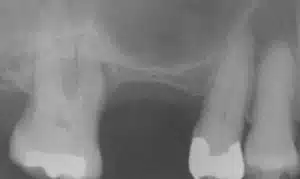
The dark space at the top of the photo is the sinus. The remaining bone is the thin white line between the teeth.
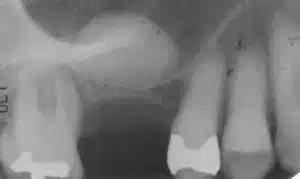
In this view sinus augmentation has been performed. The oval white structure is the bone graft material.
If there is adequate remaining bone, the sinus can be elevated at the time of implant placement preventing the necessity for two separate surgeries. The membrane lining the sinus is pushed upward through the same opening that the implant will be placed. The underlying space may be filled with bone grafting material. The dental implant will be placed and the healing process begins. After several months of healing, the implant can be restored.
If there is minimal to no bone in the sinus, the bone graft will need to be performed first. There are two types of sinus augmentation and the appropriate approach depends on the amount of remaining bone. In this procedure, the bone will need to heal for approximately six months prior to implant placement. The sinus graft makes it possible for many patients to have dental implants when years ago there was no other option besides wearing loose dentures.
Why a Sinus Lift Is Needed
In the upper back jaw, there is often limited bone due to the natural position of the sinus.
After tooth loss, this area can lose even more bone over time—making it difficult or impossible to place a dental implant without additional support.
A sinus lift allows us to create the space needed to rebuild bone and place implants predictably.
A Minimally Invasive Approach (When Possible)
In many cases, we can perform a minimally invasive sinus lift using specialized instruments such as Densah® (Versah®) burs.
This technique allows us to:
- Gently lift the sinus membrane
- Add bone graft material through the implant site
- Reduce surgical trauma
For appropriate cases, this approach can mean:
- Less discomfort
- Faster healing
- Fewer surgical steps
When a Traditional Approach Is Needed
For more advanced bone loss, a lateral window sinus lift may be required. This approach allows for:
- Greater access to the sinus area
- Placement of larger amounts of grafting material
- Treatment of more complex cases
We’ll recommend the most appropriate technique based on your anatomy and long-term goals.
Focus on Precision & Healing
We use modern grafting materials and techniques designed to support predictable bone regeneration.
When appropriate, we may also incorporate biologic support such as:
PRF (Platelet-Rich Fibrin) to enhance healing.
Our goal is to create a stable foundation for implants while minimizing recovery time.
What to Expect
We begin with detailed imaging to evaluate your bone structure and sinus anatomy.
From there, we’ll develop a treatment plan tailored to your case—whether that involves a minimally invasive lift or a more advanced approach.
Comfort-focused techniques are used throughout to help make the experience as manageable as possible.
Schedule a Consultation
If you’ve been told you don’t have enough bone for implants in the upper jaw, there may still be options.
Schedule a consultation to learn more.
FAQ SECTION
Frequently Asked Questions